Data-Driven Filtering: Utilizing Metrics to Refine Your Target Notes

Technical Optimization for Automated Link Building in 2026
The environment for search engine optimization has actually shifted significantly by 2026. Automated tools that when counted on large volume now need surgical accuracy to stay efficient. Modern search algorithms have moved beyond determining spam based upon simple keyword density. Rather, they recognize patterns in backlink profiles that recommend artificial development. For those using GSA Online search engine Ranker (SER) in 2026, success depends entirely on information filtering and the aggressive reduction of digital footprints. Success is no longer measured by the variety of links produced per minute but by the longevity and quality of the links that stick.
High-speed link generation without stringent filtering is a fast method to get a domain flagged. The goal in 2026 is to mimic the natural acquisition of links across a diverse variety of platforms while avoiding the typical markers of automation. This involves a deep configuration of task settings, making use of premium information lists, and an understanding of how search engines classify web entities. When setting up campaigns for automated link building in the local market, the focus needs to be on the quality of the target websites instead of the quantity of the submissions.
Advanced Domain Filtering and Quality Control
The primary step in decreasing a footprint is guaranteeing that the software only communicates with pertinent, high-quality targets. In the 2026 version of GSA SER, the international choices menu provides several layers of security. Among the most effective filters is the Outbound Link (OBL) count. If a page already has 500 links, adding another one provides no value and really determines the website as a "link community" that online search engine actively overlook or penalize. Setting a rigorous limitation of 40 to 60 OBL ensures that the link lives on a page that maintains some level of authority.
Language filtering has also become a non-negotiable setting. A website targeting a particular area, such as the regional area, must not have a backlink profile filled with Russian, Chinese, or Turkish comments unless those markets are specifically being targeted. By limiting the software to only post on websites that match the primary language of the project, the footprint is immediately reduced. This makes the automatic activity appear much more like natural growth stemming from a specific geographic or linguistic market.
Additionally, domain authority filters have evolved. While third-party metrics like DA or DR are still utilized, 2026 professionals choose filtering by actual traffic data. If a target site has absolutely no indexed pages or no natural traffic, it is likely a dead end. Setting up the software application to avoid these websites saves resources and prevents the production of links on "ghost" domains that exist solely for spam. Specialists who focus on Asia Virtual Solutions Projects comprehend the dangers of static footprints and focus on sites with active user engagement.
Masking the Automation Signature through Material
Material is where most automated projects fail. In 2026, using fundamental spintax that produces barely legible sentences is a significant footprint. Search engines now utilize Large Language Designs to validate the context and quality of the text surrounding a link. If the text does not make sense or is unimportant to the target URL, the link is discounted. To combat this, the integration of API-based material generation is necessary. These tools develop unique, contextually appropriate paragraphs that pass human-level readability tests.
The placement of the link within the content likewise matters. Placing a link at the really beginning or the very end of every post produces a foreseeable pattern. Varying the placement and utilizing a mix of anchor text types assists break this signature. In 2026, a natural profile consists of a heavy lean toward top quality anchors and plain URLs, with precise match keywords comprising a small portion of the overall. Over-optimization of anchor text is one of the simplest footprints for an algorithm to identify. Keeping high requirements for Asia Virtual Solutions Projects needs constant updates to international site lists and anchor text ratios.
User account range is another element in footprint reduction. Utilizing the same username or email format throughout thousands of websites is a clear indication of a single campaign. GSA SER permits using catch-all e-mails and randomized username generation. In 2026, it is standard practice to utilize multiple domain-specific e-mail addresses instead of totally free suppliers like Gmail or Outlook, which are more likely to be flagged by target sites during the registration process. This adds a layer of authenticity to the accounts being created.
Proxy Reasoning and Network Anonymity
The IP address utilized to submit a link is possibly the most obvious footprint of all. If thousands of links are produced from a single datacenter IP, search engines can easily organize those links together. By 2026, using domestic and mobile proxies has ended up being the requirement for expert automation. These proxies rotate IPs with every request or at set intervals, making it look like though the links are coming from different users in various places around the surrounding region.
Datacenter proxies are still useful for scraping, but for the actual submission procedure, they are too dangerous. The expense of residential proxies is balanced out by the higher success rate and the increased lifespan of the links. In addition, the speed of the submissions should be throttled. The "threads" embeding in GSA SER should be handled thoroughly. Running at 500 threads may produce links faster, but it also creates a spike in activity that can be spotted. A slower, more constant pace is much harder to differentiate from natural web activity.
Another technical information often ignored is the "User-Agent" string. This is the piece of data that informs a site which web browser and operating system is being utilized. If every submission uses the exact same outdated web browser string, it creates a footprint. Modern setups utilize a turning list of thousands of various User-Agents, consisting of various versions of Chrome, Safari, and Firefox across both desktop and mobile phones. This basic action makes the automated traffic appear like a diverse group of real web users.
Blacklists and Unfavorable Keyword Filtering
Safeguarding the reputation of a domain includes remaining away from "bad areas." This consists of adult sites, betting websites, and pharmaceutical domains that are not relevant to the job. GSA SER consists of an international blacklist feature that ought to be updated daily. In 2026, these blacklists have actually grown to include countless domains understood for becoming part of de-indexed personal blog site networks or "link farms" that exist just to offer low-quality positionings.
Negative keyword filtering is just as crucial. By informing the software to skip pages containing certain words, you can prevent having a link put next to controversial or unimportant material. If the job is for a regional service in the local area, you might filter out terms related to unrelated markets or generic spam terms. This guarantees that the link is surrounded by content that is at least tangentially related to the target site, which is a key consider how online search engine weight the significance of a backlink.
Automated link building also requires a technique for handling site platforms. Some platforms are more "footprint-heavy" than others. Visitor books and image comments are often seen as lower quality than article or online forum profiles. In 2026, a well balanced project focuses on platforms that enable for more long-form content. By disabling the most abused engines and concentrating on those that need more complex interactions, the resulting backlink profile looks far more professional and less like a result of a script.
Tracking and Adaptive Technique
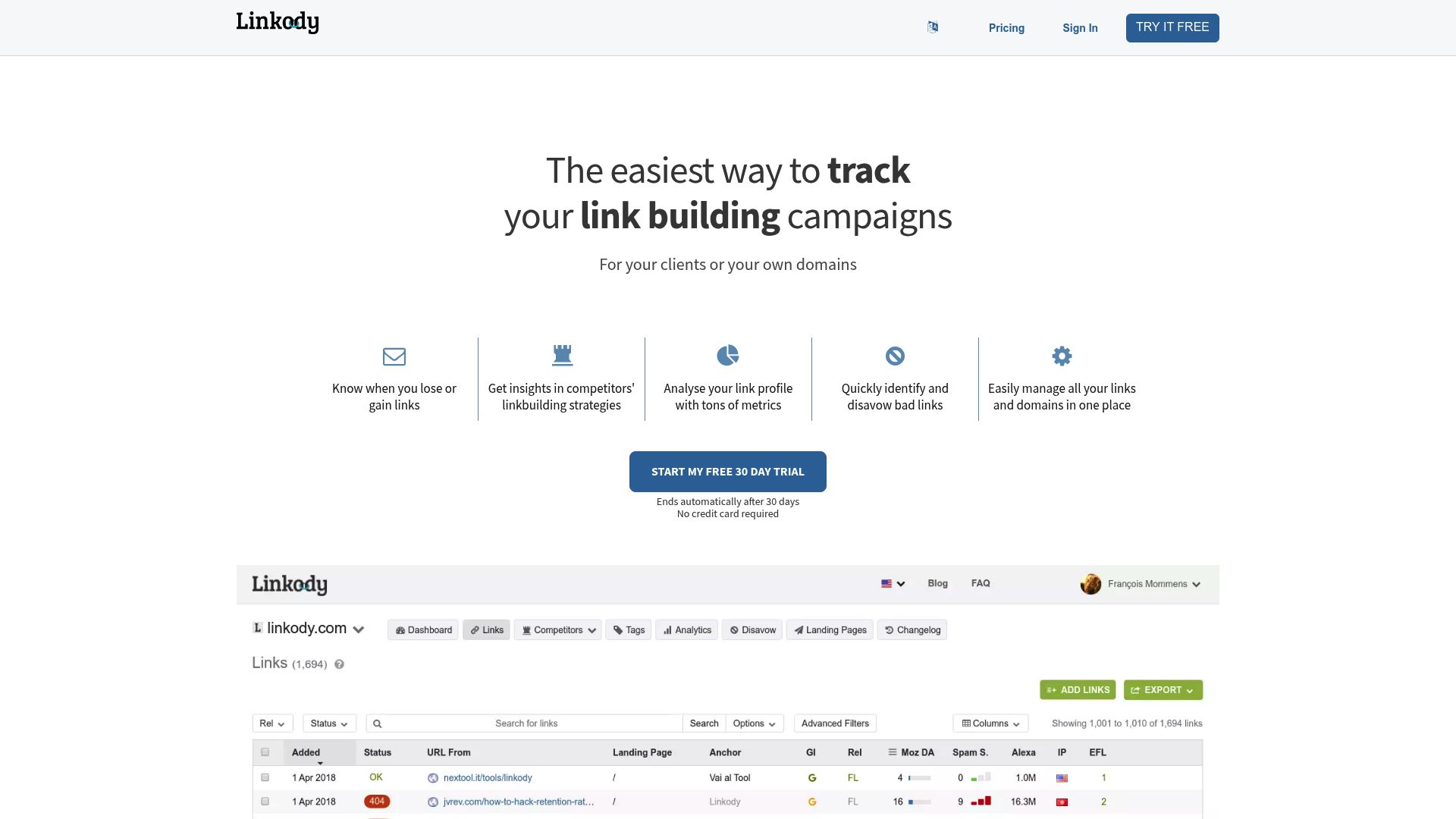
The last element of footprint decrease is the continuous tracking of the link profile. Tools that track the indexing rate and the "do-follow" versus "no-follow" ratio provide the data required to change the project. If the indexing rate drops, it usually suggests the filtering isn't stringent adequate or the content quality has actually fallen. In 2026, an indexing rate of 20% to 30% for automated links is considered healthy. Anything greater might recommend the links are too simple to get, and anything lower suggests they are too low in quality.
Routinely cleaning the "validated" list is likewise a requirement. Sites that were once premium can rapidly develop into spam hubs. By re-verifying the list every couple of weeks and removing websites that no longer meet the OBL or traffic requirements, the software application continues to build links on the very best offered targets. This proactive approach to list management is what separates professional SEO work from amateur attempts at automation.
The use of "Tiered Link Structure" remains a popular technique in 2026 to more insulate the main site. By developing high-quality automated links to the first tier of backlinks (the "Tier 2" approach), you can pass authority without the primary domain ever being straight associated with the higher-volume automated activity. This creates a buffer that protects the main asset while still benefiting from the power of automation. This multi-layered method is the most durable way to utilize tools like GSA SER in a contemporary SEO environment.
Success with automated tools needs a shift in state of mind. It is no longer about discovering a "push-button" solution for rankings. It is about utilizing advanced software application to handle the repetitive tasks of link acquisition while preserving a level of quality that satisfies the increasingly complex requirements of search engines. By concentrating on data filtering, content significance, and network privacy, it is possible to develop a backlink profile that provides real lead to 2026 without the dangers connected with older, more careless techniques.