How Decreased Ping Times Enhance the ROI of Automated Submissions
Information extraction has actually undergone a radical shift because the early days of automated surfing. In 2026, the need for high-fidelity information from online search engine and e-commerce platforms has turned simple scripts into complex operations requiring substantial facilities. Organizations that once depended on basic server-side requests now find themselves navigating a sophisticated environment of anti-bot procedures, behavioral analysis, and real-time detection systems. The choice in between domestic and datacenter proxies stays at the center of this advancement, though the lines in between these innovations have actually blurred as hardware and network protocols advance.
The Perseverance of Datacenter Proxy Infrastructure in 2026
Datacenter proxies have actually traditionally been the workhorses of the scraping industry. These IPs stem from enormous server farms and cloud suppliers. Their primary appeal has constantly been raw speed and high bandwidth. In 2026, these characteristics are more important than ever as websites serve significantly heavy properties, including high-resolution images and complex JavaScript structures. A datacenter connection can often process requests at speeds that domestic connections can not match, making them ideal for jobs where volume outweighs the requirement for stealth.
Nevertheless, the constraints of these proxies are well-documented. Due to the fact that datacenter IPs belong to known subnets owned by cloud companies, they are quickly identified by modern security filters. In 2026, many major online search engine can quickly recognize a request originating from a recognized hosting supplier and may provide a CAPTCHA or a block page. In spite of this, they remain beneficial for "warming up" targets or scraping websites with less aggressive security. Numerous designers use them for initial data mapping before switching to more costly resources for the actual extraction. Performance in Wikipedia Gateway often involves utilizing these fast connections for the less delicate parts of a crawl.
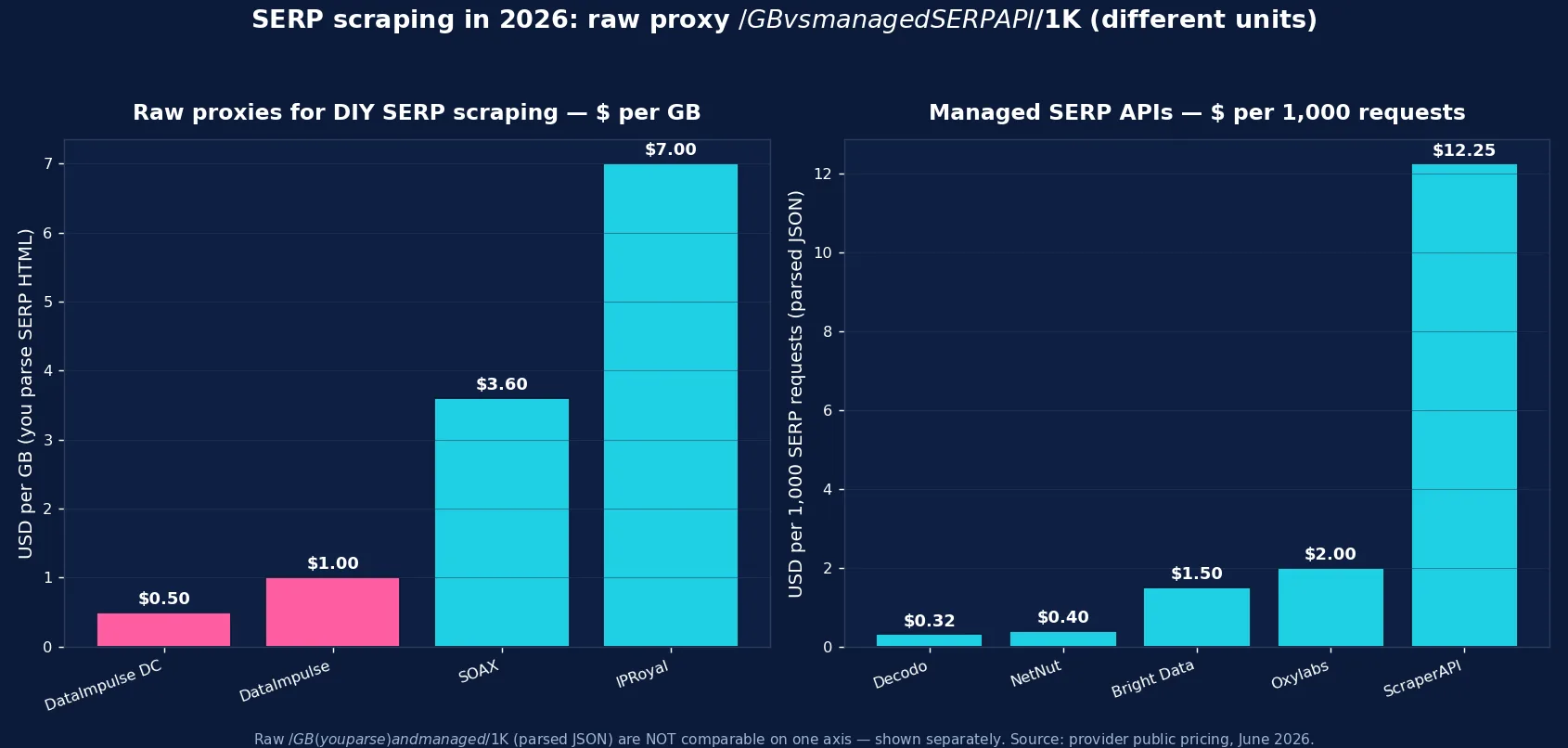
The cost-effectiveness of datacenter proxies stays their strongest selling point. For large-scale operations that need countless requests each day, the per-IP cost of datacenter resources is a portion of what residential networks demand. In 2026, infrastructure managers frequently release advanced routing reasoning that tries to utilize datacenter IPs first, falling back to property IPs just when a block is identified. This tiered technique keeps operational expenses workable while preserving high success rates.
The Increase of Residential IP Networks
Residential proxies changed the nature of web scraping by providing IPs appointed to actual physical homes by Internet Service Providers (ISPs) These addresses are indistinguishable from those utilized by regular consumers. When a scraper utilizes a residential proxy, the target website sees a demand originating from a basic family connection. In 2026, this level of trust is essential for accessing localized search outcomes or cost data that alters based upon a user's perceived place.
The advancement of these networks has seen a shift towards ethical sourcing and openness. Early domestic proxy swimming pools were typically slammed for how they got IPs, however the 2026 market is dominated by service providers who compensate users for their bandwidth. This has resulted in more steady swimming pools and greater quality connections. Due to the fact that these IPs are attached to genuine gadgets, they bring a "track record rating" that makes them extremely resilient against automated stopping. Utilizing property proxies enables for scraping at a much more granular level, often down to specific postal code or areas.
For SEO scraping, the capability to see precisely what a user in a particular city sees is indispensable. Online search engine have ended up being professional at tailoring outcomes based upon IP geolocation. Without property proxies, an SEO analyst in one nation might see totally various rankings than the target market in another. The demand for Wikipedia Professional Proxy Gateway has actually grown as companies look for to audit their search existence with overall accuracy across several areas concurrently.
Strategic Facilities and High-Bandwidth Demands
Modern scraping isn't almost text anymore. In 2026, SEO specialists often require to scrape visual components, consisting of video thumbnails, design structures, and even the filling order of elements on a page. This needs huge bandwidth. Requirement residential proxies, while sneaky, in some cases suffer from latency or slow upload speeds due to the fact that they depend on home internet connections. This resulted in the development of ISP proxies, or static residential proxies.
Static property proxies represent a happy medium. These are IPs hosted in datacenters however registered under ISP names instead of cloud suppliers. They use the speed and dependability of a datacenter with the reputation of a residential IP. In 2026, these have ended up being the gold requirement for high-bandwidth SEO jobs. They allow for relentless sessions, implying a scraper can preserve the same IP for an extended period, which is essential for navigating multi-step checkout procedures or deep website crawls that require cookie consistency.
Infrastructure strength in 2026 relies on a varied IP portfolio. A strategy that depends on a single type of proxy is a single point of failure. Top-tier scraping operations now use load balancers that distribute demands throughout datacenter, domestic, and mobile IPs based on real-time feedback. If a search engine begins to flag requests from a specific subnet, the system instantly rotates to a different supplier or IP type without human intervention.
Technical Obstacles and AI-Driven Detection
Bot detection has actually become an arms race. By 2026, basic IP rotation is no longer enough to remain unnoticed. Security platforms now utilize AI to evaluate mouse movements, typing speed, and browser finger prints. A scraper might have a perfectly tidy residential IP, but if its TLS handshake or header setup appears like a script, it will be blocked. This has forced proxy service providers to offer more than just an IP address.
Advanced proxy services now supply "header management" and "finger print spoofing" as part of their core offering. They can make a Python script look like a Chrome browser on a Windows maker or a Safari web browser on an iPhone. This level of mimicry is required because sites in 2026 are trying to find any inconsistency that recommends non-human habits. The resilience of a scraping setup is now determined by its capability to mix in with the surrounding traffic sound.
Mobile proxies have also seen a surge in use for 2026 scraping methods. These IPs originate from 5G and 6G cellular networks. Due to the fact that lots of mobile users share the exact same public IP through Carrier-Grade NAT (CGNAT), websites are really reluctant to obstruct these IPs. Blocking a single mobile IP could potentially block countless genuine users. While expensive and in some cases slower, mobile proxies supply a level of near-total anonymity for the most difficult scraping targets.
Examining Performance and Data Quality
In 2026, the success of an SEO scraping project is determined by more than simply the volume of information. Precision and freshness are the new metrics. If a scraper is being served cached information or "shadow-banned" outcomes, the information is ineffective for making service decisions. This is where high-quality domestic proxies show their worth. They make sure that the information being returned is exactly what a real user would see in real-time.
The cost of data is also a factor that requires careful management. High-bandwidth scraping can quickly result in enormous costs if not monitored. Many companies now utilize information decrease strategies, such as blocking images or CSS where they aren't required, to save money on proxy expenses. However, as search engines move toward more visual and interactive layouts, the need for full-page making has made these cost-saving measures harder to implement. The facilities must be able to handle the load of headless internet browsers like Playwright or Puppeteer, which are the standard tools for scraping in 2026.
Performance monitoring has also evolved. Scrapers now utilize real-time control panels to track success rates, action times, and the frequency of CAPTCHAs throughout various proxy pools. This data permits for the fine-tuning of rotation periods and request concurrency. If a particular domestic swimming pool is showing signs of latency, the traffic can be diverted to a faster fixed ISP swimming pool instantly. This level of dexterity is what separates successful information operations from those that are continuously fighting blocks.
The Ethical and Legal Environment in 2026
The conversation around proxy use has actually matured substantially. In 2026, there is a much clearer understanding of the legalities surrounding web scraping. Lawsuit have developed that scraping openly readily available data is normally acceptable, provided it does not concern the target server's efficiency. This has actually resulted in proxy providers carrying out stricter "Fair Use" policies to guarantee their users aren't causing denial-of-service conditions on target sites.
Personal privacy remains a leading issue. Leading proxy companies now undergo regular audits to prove that their property swimming pools are constructed on permission. For organizations, using morally sourced proxies is not simply a matter of corporate obligation however also a method to alleviate legal danger. As regulations around information privacy tighten up globally, knowing the origin of the IPs in your scraping infrastructure is a requirement for compliance.
Looking ahead, the combination of proxies with edge computing might be the next step. By processing information closer to the source IP, scraping operations can reduce latency even further. For now, the focus remains on maintaining a balance in between the speed of datacenter connections and the high trust of domestic networks. The resilience of these systems identifies the quality of the insights that drive the SEO market forward.
The advancement of this innovation reveals no indications of slowing. As online search engine become more sophisticated, the tools used to study them must likewise advance. The most successful methods in 2026 are those that acknowledge the special strengths of both datacenter and residential proxies, utilizing each where they are most effective. By building a diverse and smart facilities, organizations can guarantee they have the data they need to remain competitive in a progressively automated world.