Migrating Your SEO Setup to a Hybrid Private Cloud
Expert System Integration in automated link building for 2026
Automated link building has undergone a substantial transformation because the start of the years. By 2026, the dependence on basic optical character acknowledgment has mainly disappeared. Modern website security now utilizes behavioral analysis and high-resolution image puzzles to identify people from makers. For those using GSA Online search engine Ranker (SER), the ability to bypass these obstacles identifies the success of a project. Scaling operations in this environment requires a move towards neural network solvers that can process information with speeds and accuracy levels previously believed impossible.
The 2026 version of GSA SER stays a dominant force since of its versatility. The software application acts only as the engine. The fuel is the fixing service it connects to. When handling massive projects for digital growth, users find that the quality of the solver directly affects the indexing rate of the links created. If a solver stops working frequently, the target website marks the account as suspicious, causing shadowbans or instant IP blocks. High-precision AI solvers avoid this by imitating human response times and fixing patterns.
Improving Success Rates in modern business centers
Success in automated SEO depends upon the hardware and the logic behind the solve. In 2026, numerous professionals have moved their GSA SER instances to dedicated servers geared up with GPU velocity. This hardware allows regional AI solvers to process complex image identification jobs in milliseconds. Instead of just checking out a string of letters, these systems recognize objects, solve math problems, and even address context-aware concerns. This level of sophistication is necessary since web platforms have abandoned basic text captchas in favor of more tough visual obstacles.
For companies providing GSA SER Builder GSA SER Efficiency, the expense of resolving has actually become a primary metric. While manual resolving services exist, they can not stay up to date with the volume required for countless day-to-day submissions. AI-driven APIs have actually filled this gap, offering a fixed cost per thousand resolves no matter the captcha type. These services utilize deep learning models trained on millions of examples, permitting them to adapt to new security updates within hours of their release.
Advanced Hardware Requirements for High-Volume Scaling
Running GSA SER at a high thread count requires more than simply a quick internet connection. By 2026, the software application has actually become more resource-intensive as it deals with the scripts needed for modern-day JS-heavy sites. A common setup for a major operator includes multi-core processors and at least 64GB of RAM. This enables the engine to keep 500 to 1,000 active threads without crashing or slowing down the solve time. When thread counts are high, the latency in between the software and the captcha solver should be minimal.
Network stability is another factor that frequently goes ignored. Using 10Gbps uplinks is common in 2026 for those who desire to maximize their output. High bandwidth guarantees that the big image files used in contemporary captchas are sent and gotten without delay. Any lag in this procedure can trigger the target website to time out the session, leading to a failed submission. Experts typically position their GSA SER circumstances in information centers located in major tech hubs to reduce the distance between the engine and the target servers.
Dependability in link structure depends upon GSA SER Builder Efficiency to maintain a constant stream of validated positionings. Without a strong resolving option, the engine spends more time on stopped working attempts than on real submissions. This waste of resources increases the expense of proxies and server upkeep. Effective operators concentrate on the ratio of "resolves to validated links" rather than just the raw variety of efforts. A success rate of 80 percent or higher is the benchmark for a well-tuned system in 2026.
The Shift to Behavioral and Audio Captcha Difficulties
The nature of captchas has changed. In 2026, numerous high-authority sites have integrated audio challenges and mouse-movement tracking. GSA SER has progressed to deal with these by means of API integrations that can replicate natural mouse paths. AI solvers now provide "behavioral tokens" that satisfy the security scripts of significant platforms. These tokens are essentially digital proofs that a human-like interaction happened before the kind submission.
- Neural networks now deal with 3D item rotation puzzles with 99 percent precision.
- Audio solvers use speech-to-text models that overlook background sound and distortion.
- Logic-based captchas, which ask questions like "which animal is larger," are fixed utilizing huge language designs.
- Grid-based image choice has been optimized to identify items even when they are partly obscured or fuzzy.
Operators in various regions should pick solvers that support these particular types. A solver that just handles text will fail on 70 percent of the web in 2026. This makes the choice of a fixing partner the most crucial choice in the setup process. Numerous choose to use a main AI solver with a secondary backup service to ensure that no thread remains idle during peak hours.
Handling Proxies and IP Track Record for SEO automation
Proxies are the 2nd essential element of scaling. In 2026, fixed data center IPs are easily found by innovative firewall programs. Many successful GSA SER users have switched to mobile or domestic rotating proxies. These IPs bring a greater trust rating, which makes the captcha challenges much easier to fix. When a website sees a domestic IP, it often serves a simpler puzzle than it would to a recognized data center IP. This lowers the load on the AI solver and increases the speed of the submission.
IP rotation frequency is a setting that requires cautious tuning. If the IP changes frequently, the session may break during the captcha-solving process. If it stays the exact same for too long, the target website might start serving harder puzzles or obstruct the IP entirely. Finding the balance is crucial to keeping a high confirmation rate. A lot of 2026 setups use a "sticky session" method where the IP remains continuous throughout of a single submission but modifications for the next one.
The expense of domestic proxies has decreased as the market has actually grown, but it stays a considerable cost. To stay lucrative, link home builders utilize filters within GSA SER to avoid sites that are known to be un-solveable or that have very low indexing rates. By focusing resources on premium targets, the performance of the AI solver is taken full advantage of. This targeted method is a hallmark of professional operations in 2026.
Examining ROI and Long-Term Sustainability
The return on financial investment for automated link structure is determined by the expense per validated link. In 2026, this includes the subscription for GSA SER, the regular monthly proxy fees, the cost of the AI solving service, and the server overhead. When these variables are optimized, the cost per link remains a fraction of what manual outreach would cost. This performance allows companies to complete in congested markets without needing a massive team of manual employees.
Sustainability in SEO includes remaining ahead of the security updates. As sites carry out new AI-based defenses, the solvers must also utilize advanced AI to break them. This ongoing competition has actually created a busy environment where software updates happen weekly. Keeping GSA SER upgraded is obligatory, as the developers often release spots that improve how the engine connects with the most recent captcha solvers.
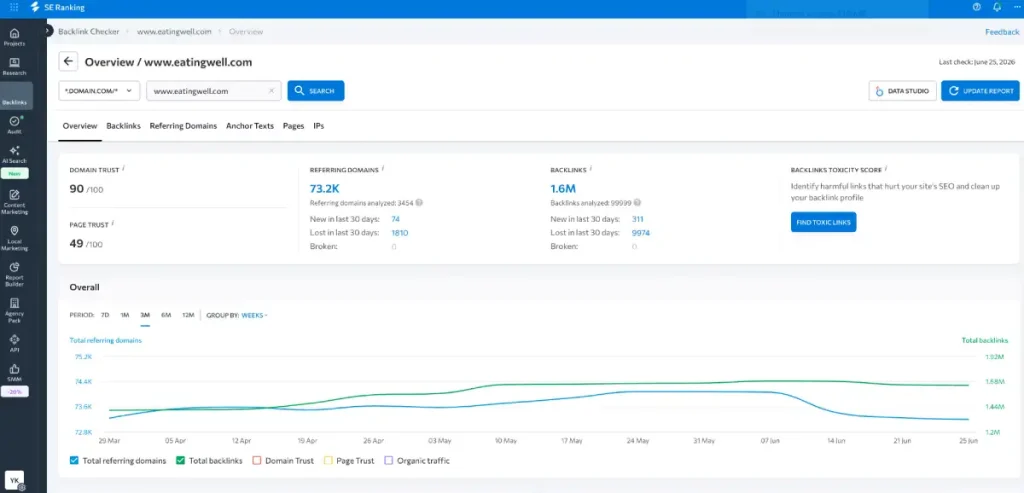
Concentrating on effectiveness rather than raw volume is the trend for 2026. Instead of sending out millions of low-grade comments, users are now focusing on visitor posts, wiki entries, and online forum profiles that offer genuine worth. The AI solvers make this possible by breaking the security of these more advanced platforms. This causes a backlink profile that looks more natural to browse engine algorithms and supplies much better long-lasting ranking stability.
The Future of Automated Submissions
As we move through 2026, the line between manual and automatic work continues to blur. AI is no longer simply a tool for solving captchas; it is also being utilized to produce the material used in the submissions. This develops a cohesive system where the software finds the target, the AI writes the post, and the neural solver bypasses the security. This level of automation permits a bachelor to manage a network that would have needed a whole department in previous years.
The shift to these technologies in the local market has enabled smaller sized agencies to provide services that were once the domain of big business. By utilizing GSA SER with high-end AI fixing, they can provide outcomes at a scale that matches the requirements of growing businesses. The secret is to stay versatile and buy the ideal infrastructure. The tools are more effective than ever, but they require a tactical hand to assist them towards the ideal targets.
Looking forward, the combination of behavioral AI will likely become the standard. Solvers will not just offer the answer to a puzzle but will likewise replicate the whole user journey, from page load to form submission. This will make automated link structure practically identical from human activity. For the expert utilizing GSA SER, 2026 represents a time of excellent opportunity for those who understand how to use these AI-powered tools to their complete capacity.