The Increase of Mobile Proxy Networks in Professional Scraping Operations

The State of Search Engine Automation in 2026
The technical requirements for collecting data from major online search engine have shifted substantially as 2026 advances. Legacy systems that depend on narrow swimming pools of IPv4 addresses now deal with mounting expenses and aggressive blocking mechanisms. The large volume of automatic requests required for contemporary market analysis makes traditional proxy techniques nearly difficult to sustain. Engineers are now focusing on IPv6 as the main structure for any massive operation including automated data retrieval. This shift is not simply about address availability but about the structural advantages that modern networking protocols provide to high-capacity bots.
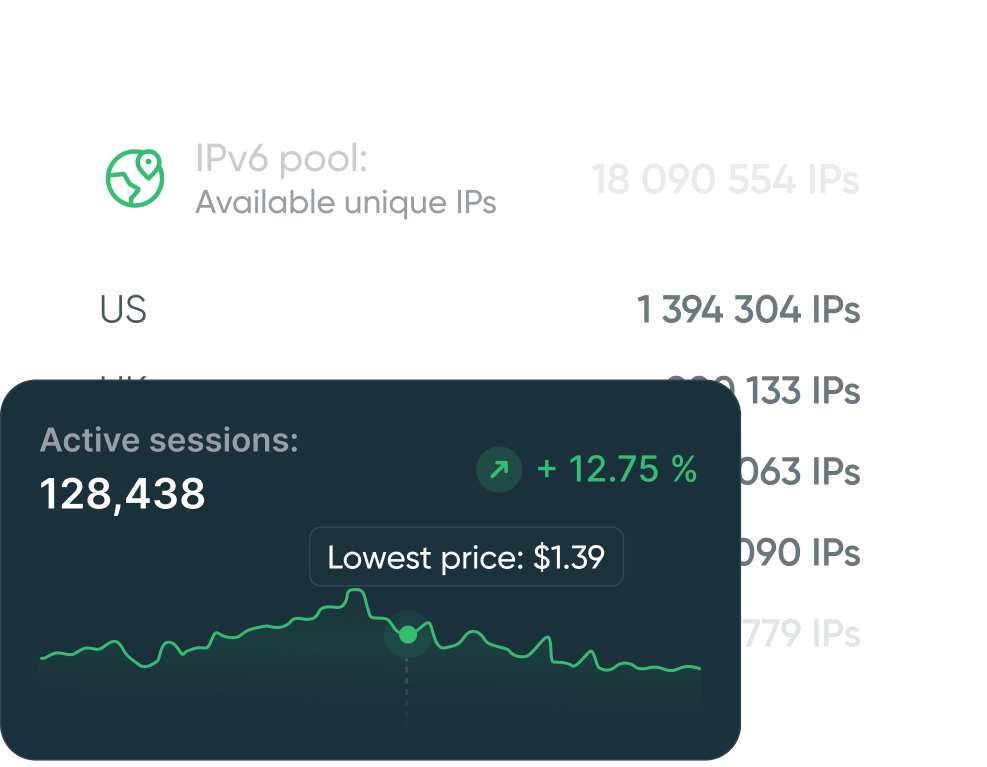
IPv4 fatigue has actually reached a critical phase where the cost per address has actually tripled over the last 2 years. In the current digital market, companies are discovering that the overhead of preserving thousands of special IPv4 exit points consumes most of their functional spending plan. By contrast, IPv6 offers a practically unlimited supply of addresses, permitting much more aggressive rotation methods without the threat of exhausting a particular subnet. This unrestricted supply changes the math for designers who require to mimic diverse user habits throughout numerous regions at the same time.
Handling Subnet Diversity for high-speed scraping
Among the main hurdles in 2026 involves how search engines group and restriction IP addresses. In the past, a ban might impact a single address or a little variety. Now, automated detection systems typically flag whole/ 64 subnets if they find suspicious patterns. This necessitates a more sophisticated technique to proxy management than simply purchasing a block of addresses and turning through them. Organizations are now acquiring/ 48 and even bigger prefixes to ensure that their traffic appears to stem from a wide array of sources instead of a single datacenter rack.
Resilience in 2026 depends on the ability to jump between subnets with zero latency. If a search engine spots a high volume of requests from a particular IPv6 range, the system should be able to immediately shift traffic to a completely different prefix. This level of agility requires a proxy infrastructure that supports programmatic control over routing tables. Lots of specific companies concentrated on Asia Virtual Solutions Value are building their own tunneling procedures to deal with these quick transitions. Without this ability, a single detection event might stall an entire information collection task for hours.
Bandwidth Requirements for Information Intensive Jobs in the tech industry
Information payloads are bigger in 2026 than they were just a few years ago. Browse outcomes are no longer easy lists of text links. They involve rich media, interactive elements, and complex JavaScript that must be rendered to draw out meaningful information. This increases the bandwidth demand on every proxy node. A proxy network that is not backed by 10Gbps or 100Gbps uplinks will rapidly become a traffic jam, resulting in timeouts and insufficient data sets. High-bandwidth facilities is now a prerequisite for any group trying to remain competitive in the field of seo and market intelligence.
Latency likewise plays an important role in how online search engine view a visitor. Bots that take too long to respond or have inconsistent ping times are easily flagged as non-human traffic. By utilizing IPv6, which was created with more efficient header processing and routing, designers can shave milliseconds off each demand. These little gains accumulate when running countless questions each day. The move toward edge-based proxy nodes has further improved this, putting the exit points better to the online search engine datacenters to decrease the physical distance data should take a trip.
Methods for automated ranking checks and Tracking
Accurate ranking data is more difficult to acquire in 2026 due to the fact that search engines have become extremely localized. A search carried out in one part of a city may yield different outcomes than a search carried out ten miles away. To catch this granularity, automation tools need to utilize proxies that are geographically tagged with accuracy. IPv6 makes this simpler by enabling the task of specific addresses to particular geographic collaborates within a network provider's facilities. This enables a level of hyper-local monitoring that was previously too costly to carry out with IPv4.
Standardized rotation policies are also developing. Instead of turning after every demand, which can look suspicious, contemporary methods involve "sticky sessions" that last for the duration of a normal human surfing session. This requires a proxy pool that is big enough to hold countless active sessions without overlap. Those who invest in Asia Virtual Solutions Value find that they can keep these sessions better due to the fact that they aren't completing for a handful of offered addresses with other users. The stability of the connection ends up being simply as essential as the amount of addresses readily available.
Avoiding Detection through Natural Traffic Patterns
Online search engine algorithms in 2026 use advanced habits analysis to compare genuine users and automated scripts. They look for patterns in demand headers, the order in which resources are loaded, and even the "jitter" in mouse movements or scrolling. Proxy networks need to have the ability to handle these requirements by supporting complete HTTP/3 and QUIC protocols, which are now the standard for web traffic. IPv6 is natively better fit for these procedures, supplying a smoother handshake and more reputable packet shipment in high-interference environments.
- Use residential-grade IPv6 prefixes to mimic home web users.
- Carry out randomized delay periods between requests to break mechanical rhythms.
- Disperse traffic throughout numerous Tier 1 web service providers to prevent being tied to a single carrier.
- Monitor the reputation of/ 64 subnets in real-time to preemptively move traffic from flagged ranges.
Getting Rid Of Implementation Hurdles in the global market
The shift to IPv6 is not without its own set of technical problems. Lots of legacy software application stacks still have underlying reliances on IPv4 logic. Upgrading these systems to be completely "IPv6-first" needs a ground-up rethink of how network sockets are managed. In 2026, the most successful engineering groups are those that have actually totally decoupled their application reasoning from the hidden network layer, enabling them to switch proxy companies and protocols without rewording their scraping scripts.
Security is another aspect that has actually acquired prominence. With the huge increase in address space, the area for possible attacks or leaks likewise grows. Proper firewall software configuration and secure tunneling are necessary to avoid the direct exposure of the automation server's true IP address. If the master server is ever unmasked, the whole operation is compromised. Using a trusted proxy bridge that manages the translation between the internal IPv4 network and the external IPv6 world is a typical solution for companies that are still in the middle of their facilities upgrades.
The Function of Maker Learning in Proxy Rotation
By 2026, proxy rotation is no longer an easy round-robin script. It has actually become a workout in predictive modeling. High-end automation platforms now use small maker finding out models to predict which subnets are probably to be successful at a provided time of day. These designs evaluate historical success rates, latency spikes, and ban frequencies to choose the optimal course for each request. This proactive management of the proxy pool guarantees that the success rate remains high even when search engines upgrade their security steps.
The focus on large-scale data harvesting has turned from a race of volume to a race of intelligence. It is no longer sufficient to have the most proxies, you need to have the most intelligent routing. This is where the versatility of IPv6 truly shines. Since there is no shortage of addresses, engineers can devote specific subnets to particular tasks or online search engine, producing a tidy separation of traffic that makes troubleshooting much simpler. When an issue arises, it is a lot easier to isolate the cause when the traffic is not muddled together in a little IPv4 range.
Last Observations on Facilities for 2026
The motion toward IPv6 for search engine automation is an irreversible shift driven by requirement. As IPv4 continues to fade into a tradition role, the tools and methods constructed around IPv6 will specify the next years of information science and digital marketing. Organizations that neglect the requirement for high-bandwidth, resilient proxy networks will discover themselves unable to take on the speed and precision of those who have accepted the change. The focus stays on maintaining a low profile while taking full advantage of throughput, a balance that only a well-managed IPv6 infrastructure can provide in the present year. Success requires a commitment to technical excellence and a determination to move far from the aging procedures of the past.