The Threat of Overusing Public Footprints in Your Scrapes

High-Performance Facilities for GSA SER in 2026
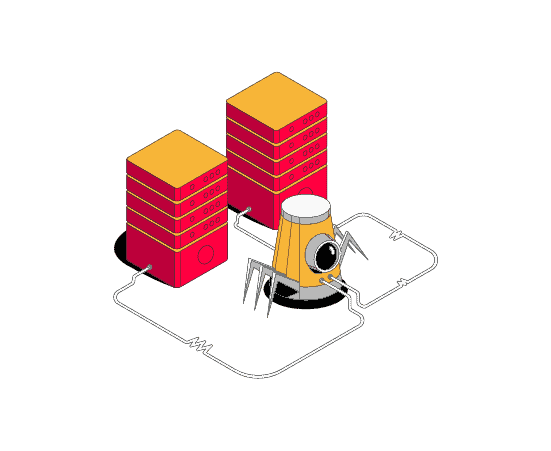
Automated link building has actually gone through considerable modifications as search algorithms developed through 2026. GSA Browse Engine Ranker remains a core tool for many professionals, however the hardware requirements to run it successfully have shifted far from standard shared hosting. The primary challenge now depends on resource contention. When numerous users share the exact same physical CPU cores on a traditional VPS, the high-thread count required by GSA SER often leads to throttled performance and software application crashes. Personal cloud VPS environments have actually ended up being the basic solution for these automation tasks because they provide dedicated resource segments within a virtualized framework.
A personal cloud setup differs from standard public clouds by offering a separated layer of hardware. This isolation ensures that the extreme CPU cycles required for parsing countless websites per minute do not experience "noisy neighbor" syndrome. In 2026, the complexity of web platforms suggests that GSA SER should manage heavier scripts and more complex type submissions than in previous years. Having a private cloud slice allows the software application to keep a stable thread count without the unpredictable speed drops that as soon as plagued massive projects.
Technical Requirements for Modern VPS Instances
Running GSA SER in 2026 requires a concentrate on specific hardware metrics. Modern instances should be equipped with a minimum of 16GB of DDR5 RAM. While the software application itself is efficient, the supporting tools-- such as AI-based captcha solvers and content generators-- take in significant memory when running along with the primary engine. The shift towards NVMe 5.0 storage is non-negotiable. The internal database of GSA SER, which tracks validated links and identified targets, performs countless read-write operations every second. Using older SSD innovation produces a bottleneck that slows down the whole submission procedure.
The option of processor also matters especially. Multi-core efficiency is the top priority. In 2026, processors with high clock speeds across a minimum of eight dedicated threads are the baseline for a single circumstances. Numerous professionals find that keeping a high success rate often depends on specialized understanding regarding Asia Virtual Solutions Emails within competitive niches. Without the underlying hardware to support fast processing, even the finest methods stop working to perform at the required volume. Private cloud companies permit the personalization of these CPU allotments, making sure that the software application never ever hits a ceiling during peak operation times.
Operating System and Software Application Configuration
Windows Server 2025 and the early 2026 builds have actually presented much better scheduling for background processes, which benefits high-intensity applications. Setting up GSA SER on these platforms involves more than simply a basic setup. Disabling unnecessary Windows services is the initial step to reclaiming system resources. Particularly, turning off visual impacts and print spoolers can release up enough CPU cycles to support an extra fifty to one hundred threads in the software application.
Another important change includes the Windows TCP/IP stack. By default, Windows limits the number of concurrent outbound connections. For an automation tool that attempts countless connections per minute, these limits need to be increased through pc registry edits. This guarantees that the VPS can deal with the huge volume of requests sent out to various engines without the OS dropping connections too soon. Implementing Asia Virtual Solutions Project Email Lists can assist streamline these technical configurations by providing pre-optimized templates for automation tasks.
Proxy Management and Network Latency
Network infrastructure is the lifeline of any GSA SER circumstances. In 2026, the reliance on low-grade public proxies has actually nearly totally vanished. A lot of effective projects now utilize a mix of turning 5G mobile proxies and property backconnect systems. These proxies require a high-bandwidth uplink on the VPS side. A 10Gbps connection is now the favored requirement for personal cloud instances to ensure that the traffic jam never takes place at the information center level.
Latency in between the VPS and the proxy provider can significantly affect the "time-to-first-byte" throughout submissions. Picking a data center location that is geographically near the proxy entry nodes reduces the timeout rate. GSA SER instances in 2026 are typically set up with aggressive timeout settings-- often as low as 15 seconds-- to skip slow targets and preserve high volume. If the VPS network is sluggish, these tight settings will lead to countless stopped working submissions that might have otherwise been successful.
Database Upkeep and Information Integrity
The large volume of data created by GSA SER in 2026 is immense. A single circumstances running 500 threads can create numerous gigabytes of log information and confirmed link entries in a few days. Efficient database management is needed to avoid the software application from decreasing with time. Frequently archiving old validated lists and cleaning out the "worldwide sites recognized" folders keeps the software application responsive. Private cloud VPS options frequently consist of automated backup functions at the block level, which is much more effective than trying to back up millions of small files by hand within the OS.
Storage reliability is equally crucial. In 2026, information corruption in large SQL-lite databases (which the software application uses for job tracking) is a common problem on cheap, oversubscribed hosting. Private clouds use redundant ranges of NVMe drives that safeguard against bit rot and hardware failure. If an instance crashes due to a software application mistake, the data integrity stays undamaged, permitting an instant restart without the requirement for prolonged database repair procedures.
Security Layers for Automation Servers
Security is frequently neglected in the context of SEO automation, yet it is vital for safeguarding the intellectual residential or commercial property of a project. A private cloud VPS supplies a hardware-level firewall that sits outside the Windows environment. This is the first line of defense against RDP brute-force attacks, which have ended up being progressively automated in 2026. Restricting RDP access to a specific IP address or utilizing a VPN tunnel is the very best practice for managing these servers.
Within the GSA SER circumstances itself, utilizing separate user represent different tasks can avoid cross-contamination if a particular material source is flagged. The usage of encrypted volumes for keeping website lists and account credentials makes sure that even if the physical server were compromised, the data would remain unreadable. These security procedures are simpler to execute on personal cloud facilities where the user has much deeper control over the virtual BIOS and boot settings.
Scaling with Several Circumstances
The majority of large-scale operations in 2026 do not depend on a single huge VPS. Instead, they utilize numerous smaller, optimized personal cloud instances. This distributed approach offers much better danger management. If one circumstances is flagged by a particular webhosting or experiences an IP-based block, the other circumstances continue to run untouched. Handling a cluster of VPS systems requires a central management console, which most high-end personal cloud providers now offer as a basic function.
The ability to clone instances is another advantage of the personal cloud. As soon as a master GSA SER instance is perfectly tuned-- with all the computer registry hacks, firewall program guidelines, and software application settings in location-- it can be turned into a design template. New instances can be released from this template in minutes, permitting for fast scaling when a brand-new niche or job needs instant volume. This modular approach to facilities is what separates expert attires from enthusiasts in the 2026 SEO environment.
Dependability is the final piece of the puzzle. The 2026 search environment moves too quick for downtime. Private cloud VPS service providers normally offer a 99.99% uptime warranty backed by hardware redundancy. If a physical node fails, the virtual instance is immediately moved to another node without the user ever seeing a blue screen. For GSA SER, which is created to run 24/7, this level of stability is the difference in between a successful project and a lost financial investment in proxies and material.