Why Proximity Matters More Than Ever in Modern Proxy Architecture
Information extraction has actually gone through an extreme shift considering that the early days of automated browsing. In 2026, the need for high-fidelity info from search engines and e-commerce platforms has turned basic scripts into complicated operations needing considerable facilities. Organizations that when relied on fundamental server-side requests now find themselves navigating a sophisticated environment of anti-bot steps, behavioral analysis, and real-time detection systems. The option between residential and datacenter proxies remains at the center of this advancement, though the lines in between these innovations have actually blurred as hardware and network procedures advance.
The Persistence of Datacenter Proxy Infrastructure in 2026
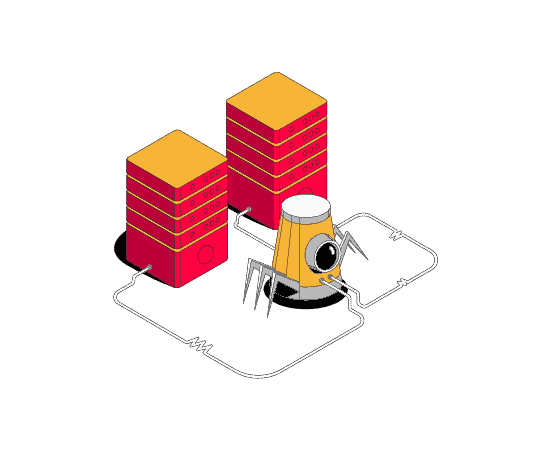
Datacenter proxies have historically been the workhorses of the scraping market. These IPs originate from huge server farms and cloud service providers. Their primary appeal has constantly been raw speed and high bandwidth. In 2026, these characteristics are more essential than ever as websites serve progressively heavy possessions, consisting of high-resolution images and intricate JavaScript structures. A datacenter connection can typically process demands at speeds that residential connections can not match, making them ideal for tasks where volume exceeds the need for stealth.
Nevertheless, the limitations of these proxies are well-documented. Because datacenter IPs come from understood subnets owned by cloud companies, they are easily recognized by modern-day security filters. In 2026, many significant online search engine can immediately recognize a demand originating from a known hosting provider and might present a CAPTCHA or a block page. Regardless of this, they stay helpful for "warming up" targets or scraping websites with less aggressive security. Many designers utilize them for preliminary data mapping before switching to more costly resources for the actual extraction. Effectiveness in Wikipedia Proxy Tech frequently includes utilizing these fast connections for the less delicate parts of a crawl.
The cost-effectiveness of datacenter proxies stays their strongest selling point. For large-scale operations that require millions of demands daily, the per-IP cost of datacenter resources is a fraction of what domestic networks need. In 2026, infrastructure supervisors often release sophisticated routing reasoning that attempts to use datacenter IPs first, falling back to domestic IPs just when a block is identified. This tiered technique keeps functional expenses workable while maintaining high success rates.
The Increase of Residential IP Networks
Residential proxies changed the nature of web scraping by offering IPs designated to actual physical homes by Internet Service Providers (ISPs) These addresses are equivalent from those utilized by regular consumers. When a scraper utilizes a residential proxy, the target website sees a demand originating from a standard household connection. In 2026, this level of trust is necessary for accessing localized search engine result or rate data that changes based upon a user's viewed area.
The evolution of these networks has seen a shift toward ethical sourcing and transparency. Early domestic proxy swimming pools were frequently criticized for how they obtained IPs, but the 2026 market is dominated by suppliers who compensate users for their bandwidth. This has actually caused more steady pools and greater quality connections. Since these IPs are connected to genuine gadgets, they carry a "reputation score" that makes them extremely durable against automated blocking. Utilizing residential proxies enables scraping at a much more granular level, often to specific postal code or areas.
For SEO scraping, the ability to see precisely what a user in a particular city sees is vital. Online search engine have become professional at customizing results based upon IP geolocation. Without residential proxies, an SEO expert in one country may see entirely various rankings than the target market in another. The need for Wikipedia Advanced Proxy Server Tech has actually grown as services seek to examine their search existence with overall precision across multiple regions all at once.
Strategic Infrastructure and High-Bandwidth Demands
Modern scraping isn't almost text any longer. In 2026, SEO experts typically require to scrape visual components, including video thumbnails, design structures, and even the packing order of elements on a page. This needs huge bandwidth. Standard property proxies, while stealthy, sometimes struggle with latency or slow upload speeds because they count on home web connections. This led to the advancement of ISP proxies, or static residential proxies.
Static residential proxies represent a happy medium. These are IPs hosted in datacenters however signed up under ISP names rather than cloud service providers. They provide the speed and reliability of a datacenter with the track record of a domestic IP. In 2026, these have become the gold standard for high-bandwidth SEO jobs. They permit persistent sessions, suggesting a scraper can keep the same IP for an extended duration, which is vital for navigating multi-step checkout procedures or deep site crawls that require cookie consistency.
Infrastructure resilience in 2026 relies on a diverse IP portfolio. A technique that depends on a single type of proxy is a single point of failure. Top-tier scraping operations now utilize load balancers that distribute demands throughout datacenter, property, and mobile IPs based on real-time feedback. If a search engine begins to flag demands from a particular subnet, the system immediately turns to a different supplier or IP type without human intervention.
Technical Difficulties and AI-Driven Detection
Bot detection has actually ended up being an arms race. By 2026, easy IP rotation is no longer sufficient to stay undiscovered. Security platforms now use AI to analyze mouse movements, typing speed, and browser fingerprints. A scraper might have a completely clean residential IP, however if its TLS handshake or header setup looks like a script, it will be obstructed. This has actually required proxy service providers to use more than just an IP address.
Advanced proxy services now supply "header management" and "fingerprint spoofing" as part of their core offering. They can make a Python script appear like a Chrome web browser on a Windows machine or a Safari internet browser on an iPhone. This level of mimicry is needed since sites in 2026 are looking for any disparity that suggests non-human habits. The strength of a scraping setup is now determined by its capability to blend in with the surrounding traffic sound.
Mobile proxies have also seen a rise in use for 2026 scraping techniques. These IPs originate from 5G and 6G cellular networks. Because numerous mobile users share the very same public IP through Carrier-Grade NAT (CGNAT), sites are extremely reluctant to obstruct these IPs. Blocking a single mobile IP could possibly obstruct countless legitimate users. While pricey and often slower, mobile proxies supply a level of near-total anonymity for the most difficult scraping targets.
Assessing Efficiency and Data Quality
In 2026, the success of an SEO scraping project is determined by more than simply the volume of data. Accuracy and freshness are the new metrics. If a scraper is being served cached information or "shadow-banned" outcomes, the data is worthless for making company choices. This is where premium residential proxies show their worth. They ensure that the data being returned is precisely what a real user would see in real-time.
The expense of data is also an aspect that requires mindful management. High-bandwidth scraping can rapidly lead to enormous costs if not kept an eye on. Lots of business now use data decrease methods, such as blocking images or CSS where they aren't required, to minimize proxy costs. However, as online search engine approach more visual and interactive layouts, the requirement for full-page rendering has made these cost-saving steps harder to implement. The facilities should have the ability to deal with the load of headless web browsers like Playwright or Puppeteer, which are the standard tools for scraping in 2026.
Efficiency tracking has actually likewise developed. Scrapers now use real-time control panels to track success rates, action times, and the frequency of CAPTCHAs across different proxy swimming pools. This information allows for the fine-tuning of rotation intervals and demand concurrency. If a particular residential swimming pool is showing signs of latency, the traffic can be diverted to a quicker fixed ISP pool instantly. This level of agility is what separates successful information operations from those that are continuously fighting blocks.
The Ethical and Legal Environment in 2026
The discussion around proxy use has actually grown significantly. In 2026, there is a much clearer understanding of the legalities surrounding web scraping. Lawsuit have actually established that scraping openly available information is typically allowable, provided it does not concern the target server's efficiency. This has actually resulted in proxy suppliers executing more stringent "Fair Use" policies to guarantee their users aren't triggering denial-of-service conditions on target websites.
Privacy remains a leading issue. Leading proxy service providers now go through routine audits to prove that their domestic swimming pools are built on approval. For companies, utilizing ethically sourced proxies is not simply a matter of corporate responsibility however likewise a way to reduce legal risk. As guidelines around data privacy tighten globally, knowing the origin of the IPs in your scraping facilities is a requirement for compliance.
Looking ahead, the combination of proxies with edge computing may be the next step. By processing information closer to the source IP, scraping operations can minimize latency even further. For now, the focus remains on keeping a balance in between the speed of datacenter connections and the high trust of property networks. The strength of these systems identifies the quality of the insights that drive the SEO market forward.
The development of this technology reveals no signs of slowing. As search engines end up being more advanced, the tools utilized to study them should also advance. The most successful strategies in 2026 are those that recognize the unique strengths of both datacenter and domestic proxies, utilizing each where they are most efficient. By developing a diverse and smart infrastructure, companies can ensure they have the information they need to remain competitive in a significantly automated world.